

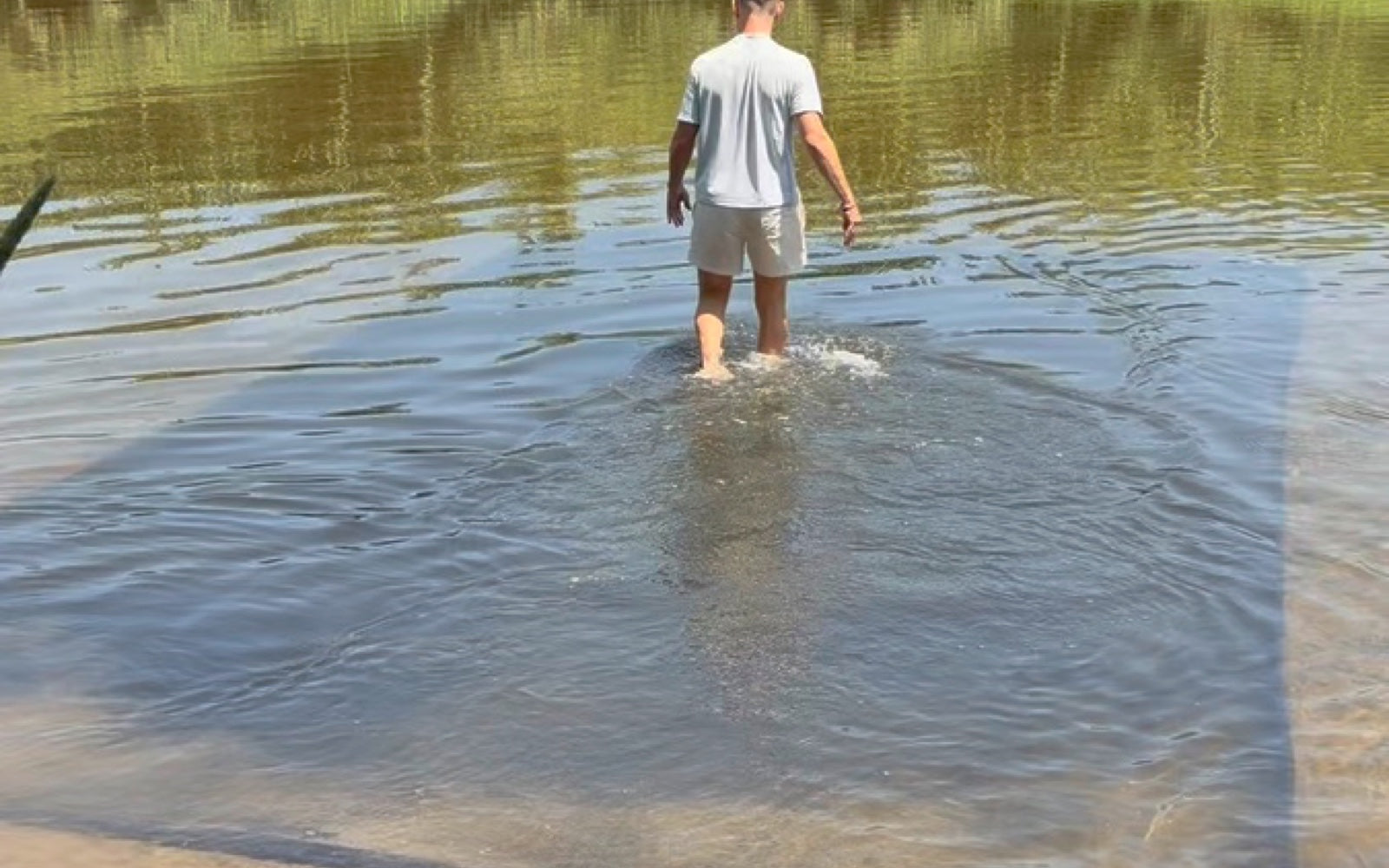
A fountain can make a pond look dressed for company. That does not mean it has volunteered to sweep your lake mat.
Aeration, surface circulation and moving loose deposits off a mat are different jobs. Some equipment can contribute to more than one, but the direction and position of the water flow matter. Buying something that moves water is not enough to know what will happen at the bottom.
If your mat is collecting leaves, silt or other loose material, start with the deposit and the mat maker’s care instructions. Then decide whether ordinary cleaning is enough or whether a properly matched water-moving device could help.
First, find out what is sitting on the mat
A light layer that settled yesterday is a different maintenance problem from a heavy, established accumulation. It also matters whether you are seeing loose debris on top of the mat, plants rooted in a layer of deposited material or the soft bottom underneath it.
Those are useful distinctions because a mat is not a vacuum. Material that lands on top can still need attention. Maintaining a usable surface does not mean that the underlying muck has disappeared.
LakeMat’s published care instructions explain that deposits on top can provide a place for weeds to grow and describe cleaning by moving the mat through the water or using a push broom, as appropriate. They also discuss water pressure as a way some owners move deposits off the mat. This supports considering the cleaning job; it is not a promise that every blower model fits every mat or waterfront. The instructions distinguish mats with sand, which call for gentler cleaning that leaves the sand in place.
Follow the current instructions for your exact mat before moving or cleaning it. A powered device is an option to evaluate, not an automatic replacement for that care.
What is the equipment supposed to do?
| Job | What to evaluate | What it does not establish |
|---|---|---|
| Aeration | Equipment intended to add oxygen or support circulation, selected for the waterbody and goal | That useful cleaning flow reaches the mat |
| Surface movement | Flow directed along the surface toward floating material | That the unit can aim at bottom deposits |
| Moving loose material off a mat | A suitable flow path across the intended area, within both manufacturers’ instructions | That sediment is removed from the waterbody or cannot return |
The key is the work at the mat, not just visible movement somewhere nearby. A fountain display above the water tells you very little about the direction of flow across the surface you want to maintain.
AquaSweep is a product family, not one universal setup
Scott Aerator describes its Dock Mount AquaSweep as a directional water-moving device. Its positioning can be adjusted for different water-movement tasks, subject to the exact model’s instructions. That makes direction, mounting and the surroundings important parts of the selection.
The Floating AquaSweep is an important counterexample. Scott specifically says the floating model is intended to create surface current and does not point down for muck maintenance. The name alone therefore does not establish that a particular AquaSweep is appropriate for cleaning deposits near the bottom.
Do not pick a motor size, angle or distance from a generic article. Check the exact unit, mat, mounting location and desired flow path with the manufacturers. Ask us about current availability and fit before choosing equipment.
Moving a deposit is different from removing it
If water flow shifts loose material off a mat, the next question is where it goes. It has not vanished. A setup that sends debris into the next use area, onto a neighbor’s waterfront or back toward the mat has not delivered the result you wanted.
Bottom conditions, water movement and the kind of deposit all affect the practical outcome. Avoid treating a published reach figure as a guarantee for your property. Check with your lake authority or the relevant local agency before using equipment that disturbs or relocates bottom material; requirements depend on the location and activity.
This is also why “more power” is not a useful stand-alone buying rule. Match the task first. Bigger equipment can still be doing the wrong job in the wrong place.
Make the cleaning plan work with the swim plan
Powered equipment belongs in a plan that follows the exact electrical and operating instructions. The Scott Aerator manual library links the AquaSweep instructions, which require GFCI protection, prohibit extension cords and require disconnecting power when swimmers are present and before adjustment. Use the current matching manual rather than improvising from a social clip.
That detail matters at a family waterfront. The swim area and the powered-maintenance routine need to work around each other. Keep people out of the water during operation as instructed, and do not reach in to reposition running equipment.
Let the actual job lead the shopping
If your goal is aeration or a fountain display, compare equipment for that purpose in our pond aerator and fountain collection. It is a separate choice from finding flow that may help with loose deposits on a mat. Our dock and lift accessories cover other parts of the waterfront setup without making every product a muck-control tool.
For the mat-cleaning question, ask Lake & Pond Shop about your situation. Tell us which mat you have, what is collecting on it and whether the intended area is also used for swimming. We can help you start with the right equipment questions instead of a bigger motor and crossed fingers.
Less guesswork. More time enjoying the water.


